A whole-house filter vs softener comparison starts with the water concern you want to address. A carbon filter and a water softener do different jobs. Carbon filtration may be a fit for chlorine taste and odor when the selected product supports that use. A conventional ion-exchange softener removes hardness minerals. Your water conditions determine whether one, both, or neither is appropriate.
The wording can be confusing: “whole house” describes where treatment happens, while “softener” describes a treatment function. A softener can also treat water for the whole home. As the CDC explains, whole-home treatment covers most or all of the water entering a house. This comparison focuses on carbon filtration and conventional ion-exchange softening.
Start with your water concern
Before comparing equipment, identify what you want to change. Review your utility’s water quality report if you receive public water. If you use a private well, or need to investigate a concern at your home, arrange appropriate testing. The CDC cautions that taste, smell, and appearance alone cannot establish whether water is safe.
Write down your priorities separately. An unwanted taste is a different question from measured hardness. If you are concerned about a particular contaminant, identify it before shopping rather than assuming that either system will address it.
What a whole house carbon filter does
Carbon filters are selected for particular filtration goals, such as chlorine taste and odor. What a filter reduces depends on its media, design, and operating conditions. Browse our Whole House Water Filter Systems, then check that the product you are considering addresses your water concern.
A chlorine taste-and-odor claim does not establish hardness, lead, or bacteria reduction. Check those applications separately. If a product is certified, check the specific reduction claim for that model, as NSF recommends. Certification does not mean that a product treats every water concern.
What a water softener does
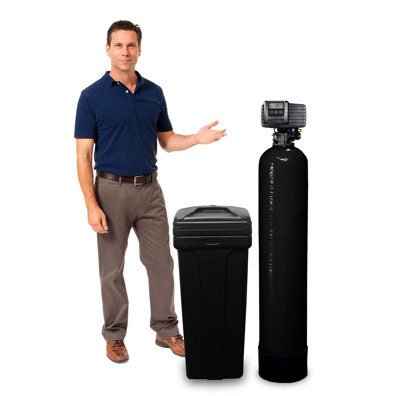
A conventional ion-exchange water softener removes hardness minerals, primarily calcium and magnesium. If testing confirms hardness and scale is your concern, compare our water softeners. Our guide to how water softeners work explains the treatment process in more detail.
Softening addresses hardness; it is not a general guarantee of contaminant removal or drinking-water safety. The EPA’s water softener guide recommends choosing a softener for an actual hardness need and checking local requirements before buying.
Filter vs Softener Comparison for Your Home
Match the concern identified in your water report or test results with the appropriate treatment, then review the product and installation requirements.
| Water concern | Option to discuss | Details to check |
|---|---|---|
| Hardness | Ion-exchange softening | Hardness level, capacity, regeneration, and installation needs |
| Chlorine taste or odor | Carbon filtration suited to that concern | The model’s supported uses, operating conditions, and maintenance |
| Hardness plus a separate filtration concern | Filtration and softening together | The purpose of each stage and the layout for the selected models |
When you may need both
If your water has hardness and a separate filtration need, discuss using both systems. Ask what each stage would address and why it is needed. This helps you compare a complete treatment setup without adding equipment that has no clear purpose.
The installation order and connections depend on the selected systems. Have H2O and your installer check the layout against the current manuals, water conditions, and household demand. Confirm any drain, power, and service-space requirements before ordering.
Compare ownership as well as purchase price
For a filter, ask which cartridges, media, or other components require service and how the manufacturer determines when service is due. For a conventional softener, ask about salt replenishment, regeneration water use, settings, and other maintenance. Requirements depend on the model and operating conditions; there is no single schedule for every home.
In a filter vs softener comparison, include installation and ongoing service. Ask for the replacement part numbers and maintenance instructions for each system so you can plan for ownership as well as the initial purchase.
Get help choosing a system
Before asking for a recommendation, collect your water report or test results, the concern you want to address, any existing equipment model numbers, and photos of the installation area. Note which fixtures may run together during your busiest period of water use.
For help reviewing household demand, see our Whole House Water Filter Sizing Guide. Then contact H2O Distributors or call 1-800-955-8561. Share your water concerns and equipment details so our team can help you compare the options before you buy.


